English

Ion chromatography (IC) is a highly efficient analytical technique for separating and quantifying ions in a wide range of samples. It enables reliable ion chromatography analysis for environmental monitoring, food safety, pharmaceuticals, chemical production, and water quality testing. Prin-Cen ion chromatography instruments provide stable performance, high sensitivity, and excellent repeatability. Supported by intelligent software and user-friendly operation, each ion chromatography system delivers accurate, traceable results for demanding laboratory testing, regulatory compliance, quality control, and advanced scientific research.
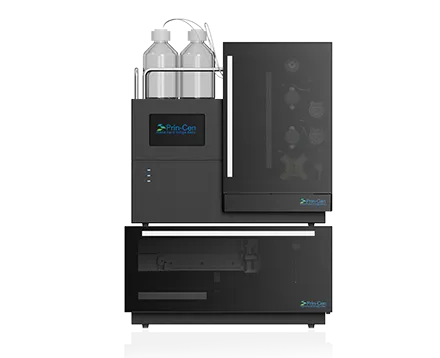
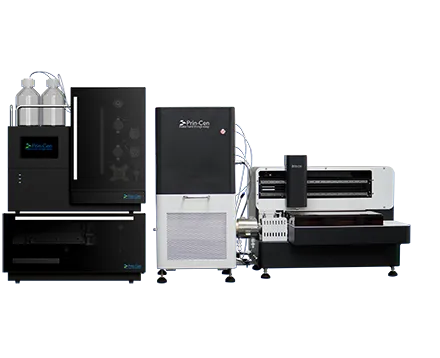
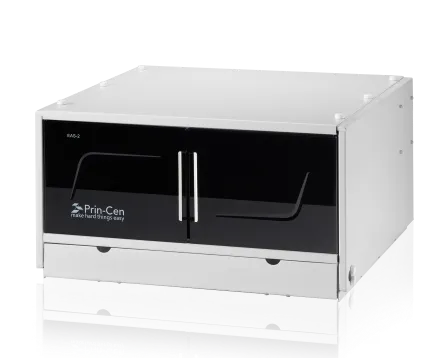
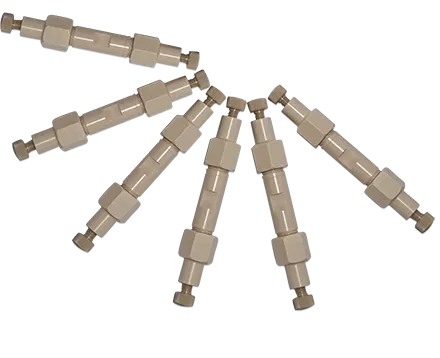
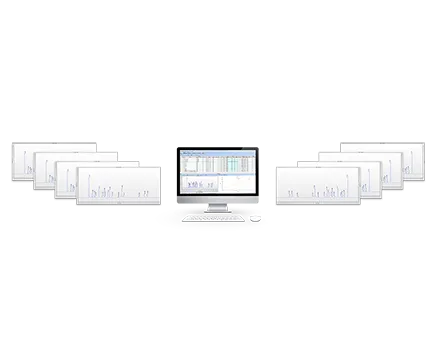
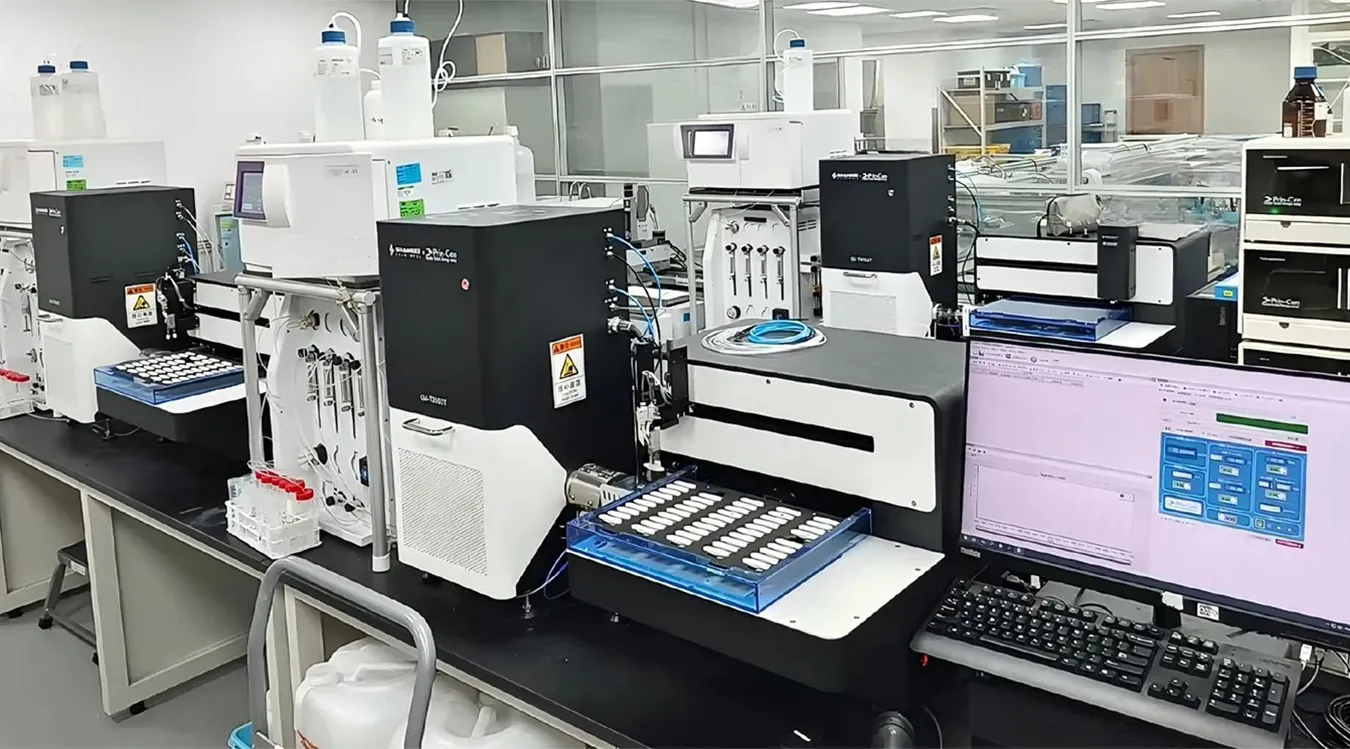

Prin-Cen ion chromatography instruments provide stable, high-precision analytical solutions for environmental, pharmaceutical, food safety, and industrial laboratories. Designed for reliable ion chromatography testing, each system combines robust hardware with intelligent data management to support recognized ion chromatography standards and regulatory requirements. Complete data integrity and traceability help laboratories generate accurate, auditable ion chromatography results. With consistent performance, sensitive detection, and user-friendly software, our instruments deliver repeatable data for routine quality control, compliance verification, and demanding scientific analysis.
Ion chromatography separates and quantifies ions in liquid samples. In a typical ion chromatography method, a prepared sample is injected into the system and carried by the ion chromatography eluent through an analytical column. Different ions interact with the stationary phase to varying degrees and therefore leave the column at different retention times. The resulting chromatograms support component identification and quantitative ion chromatography analysis.
The sample may be filtered, diluted, extracted, or otherwise treated according to its matrix and target ions. Appropriate ion chromatography sample preparation helps reduce contamination and matrix interference. A defined sample volume is then injected into the system.
A high-precision ion chromatography pump delivers the eluent through the system at a controlled and stable flow rate. The eluent composition can be selected according to the target anions, cations, sample complexity, and required separation performance.
Ion chromatography columns separate ions according to their different affinities for the ion-exchange stationary phase. As a result, individual ions leave the analytical column at different retention times, enabling reliable separation and identification.
In suppressed-conductivity configurations, the ion chromatography suppressor reduces background conductivity and improves the response of target ions.The separated ions are then measured using an ion chromatography conductivity detector or another compatible detection system.
The detector signal is processed by the EasySpec chromatography workstation to generate a chromatogram. Retention times and peak areas are used for component identification, calibration, and quantification, helping laboratories generate accurate, repeatable, and traceable ion chromatography results.
Choosing the right ion chromatography instrument requires more than comparing basic specifications. Laboratories should consider the target ions, sample matrix, required sensitivity, daily sample volume, automation level, data compliance, and future application needs. A properly configured ion chromatography system can improve separation efficiency, reduce manual operation, and deliver more consistent analytical results.
| Selection Factor | Questions to Consider |
| Target analytes | Are you analyzing anions, cations, Cr(VI), organic acids, halogens, or elemental species? |
| Sample matrix | Are the samples clean, high-salt, organic-rich, corrosive, or otherwise complex? |
| Sensitivity | Is the analysis intended for routine, trace, or ultra-trace levels, and what detection limits are required? |
| Sample throughput | How many samples need to be analyzed each day? |
| Automation | Are automated injection, dilution, filtration, or pretreatment functions required? |
| Detector configuration | Is conductivity detection sufficient, or is another detector interface needed? |
| Data management | Are data traceability, access control, and standardized reporting required? |
| Technical support | Is method development, training, installation, or customized configuration needed? |
Prin-Cen ion chromatography instruments support reliable ionic analysis across environmental monitoring, food safety, pharmaceutical production, chemical manufacturing, and water quality testing. Each ion chromatography application can be configured to measure anions, cations, and other ionic components in complex samples. With stable separation performance, a sensitive ion chromatography detector, and a low ion chromatography detection limit, our instruments meet diverse laboratory requirements. They provide dependable support for routine quality control, scientific research, process monitoring, and regulatory compliance across multiple industries.
 1. What is an ion chromatography instrument used for?
An ion chromatography instrument separates, identifies, and quantifies charged compounds in liquid samples. It is widely used for water quality, environmental monitoring, food safety, pharmaceutical analysis, chemical testing, and scientific research.
2. What components are included in an ion chromatography system?
A typical ion chromatography system includes an eluent reservoir or generator, pump, injector or autosampler, analytical column, detector, chromatography data workstation, and, where applicable, a suppressor. The exact configuration depends on the analytical method and sample type.
3. What is the role of ion chromatography columns?
Ion chromatography columns separate ions according to differences in their interactions with the stationary phase. Column selection depends on the target analytes, such as anions, cations, and organic acids, as well as the sample matrix and analytical method. Specialized columns may also be used for selected elemental species in coupled applications.
4. How does an ion chromatography conductivity detector work?
An ion chromatography conductivity detector measures changes in electrical conductivity as separated ions leave the column. It is commonly combined with suppression technology to reduce background conductivity and improve analytical sensitivity.
5. What affects the ion chromatography detection limit?
The ion chromatography detection limit depends on detector sensitivity, column efficiency, eluent purity, suppression performance, injection volume, calibration quality, sample preparation, and matrix interference.
6. How should samples be prepared for ion chromatography analysis?
Depending on the sample matrix and target ions, ion chromatography sample preparation may include filtration, dilution, extraction, enrichment, matrix removal, or digestion when required by the method. The selected procedure should minimize contamination and prevent the loss or alteration of target analytes.
7. How do I choose a suitable ion chromatography method?
The ion chromatography method should be selected according to the target ions, sample matrix, concentration range, required resolution, testing standard, column chemistry, eluent conditions, and detector configuration.
8. How much does an ion chromatography instrument cost?
The ion chromatography instrument price varies according to the pump, autosampler, detector, suppressor, columns, sample preparation modules, software, and automation requirements. A configuration-based quotation is therefore more useful than a standard price.
9. Can ion chromatography be coupled with mass spectrometry?
Yes. Ion chromatography mass spectrometry (IC-MS) can improve selectivity and support the identification of selected ionic compounds. Ion chromatography may also be coupled with ICP-MS for elemental speciation analysis, depending on the target species and analytical method.
10. How can I choose between ion chromatography instrument manufacturers?
When comparing ion chromatography instrument manufacturers, consider analytical performance, application experience, system flexibility, data management and traceability, method support, installation, training, maintenance, and long-term parts availability.