English
Selecting the right analytical instrument for trace and ultra-trace detection requires careful evaluation of sensitivity, accuracy, automation, sample compatibility, and long-term reliability. A high-performance Ion Chromatography system should provide precise ion separation, excellent detection capability, flexible applications, and reliable data management to support demanding laboratory research.
For laboratories analyzing environmental samples, food products, pharmaceuticals, industrial materials, or complex matrices, the ideal ion chromatography solution should not only deliver accurate results but also simplify daily operation and improve laboratory efficiency.
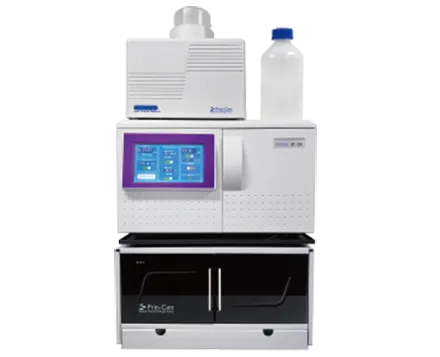
Prin-Cen Scientific Limited develops advanced analytical instruments designed for trace and ultra-trace analysis at ng–pg levels, providing reliable solutions for anion/cation analysis, elemental speciation, rare earth analysis, and high-salt matrix testing.
Ion Chromatography is an advanced analytical technique used to separate and quantify ionic compounds based on their interaction with an ion exchange column. Compared with traditional ion detection methods, it provides higher selectivity, better sensitivity, and the ability to analyze multiple ions simultaneously.
The technology is widely used for detecting:
Inorganic anions such as fluoride, chloride, nitrate, and sulfate
Common cations including sodium, potassium, calcium, and magnesium
Organic acids and polar ionic compounds
Trace-level elements and ionic species
For modern laboratories, trace analysis has become increasingly important because contaminants and target compounds often exist at extremely low concentrations. A reliable Ion Chromatography system enables researchers to achieve accurate measurements while reducing analysis errors caused by complex sample conditions.
Advanced ion chromatography solutions are especially valuable in applications where detection limits, repeatability, and data reliability directly influence research conclusions and product quality.
Choosing an ion chromatograph requires more than comparing basic specifications. Laboratories should evaluate the complete analytical performance and how well the instrument matches their application requirements.
For trace and ultra-trace applications, sensitivity is one of the most important selection criteria. The instrument should provide stable detection performance and accurate quantification even when target compounds exist at very low concentrations.
Prin-Cen Scientific’s analytical platforms focus on high-sensitivity detection capabilities, supporting trace and ultra-trace analysis at ng–pg levels. This allows researchers to handle challenging analytical tasks that require extremely low detection limits.
Different industries involve different sample complexities. Environmental water, food extracts, industrial chemicals, and pharmaceutical samples may contain interfering components that affect analytical performance.
A high-quality Ion Chromatography system should support:
Complex sample preparation workflows
High-salt matrix analysis
Multiple ion detection requirements
Flexible analytical methods for different applications
This capability helps laboratories achieve consistent results across various sample types.
Modern laboratories increasingly require instruments that reduce manual operation and improve productivity.
Important automation features include:
Automated sample preparation
Intelligent workflow management
Reduced operator involvement
Improved analysis consistency
Prin-Cen provides automated pretreatment systems and the EasySpec series workstation, helping laboratories simplify complex analytical processes while improving operational efficiency.
For regulated industries, data integrity is essential. Analytical systems should provide reliable software functions for data processing, storage, and traceability.
The EasySpec series workstation is designed with powerful data management capabilities and compatibility with multiple analytical systems while complying with 21 CFR Part 11 requirements.
A suitable Ion Chromatography system can support a wide range of industries by providing accurate ionic compound analysis.
Environmental laboratories use ion chromatography to measure ions in water, soil extracts, and industrial discharge samples. Accurate detection of inorganic ions helps evaluate pollution levels and ensure compliance with environmental standards.
Food laboratories apply ion chromatography for analyzing inorganic ions, preservatives, organic acids, and other ionic compounds. Reliable results help manufacturers maintain product consistency and safety.
In pharmaceutical analysis, ionic impurities and elemental species may influence product quality. High-performance analytical instruments help researchers monitor trace components during development and quality control.
Industries such as electronics, chemicals, and energy require precise analysis of ionic contaminants. Ion chromatography provides effective solutions for monitoring material purity and process stability.
Ultra-trace analysis presents several challenges, including extremely low analyte concentrations, complex sample backgrounds, and strict accuracy requirements.
A professional Ion Chromatography system should combine:
| Key Capability | Importance |
|---|---|
| High sensitivity detection | Enables accurate measurement of trace-level compounds |
| Stable separation performance | Improves analytical repeatability |
| Automated pretreatment | Reduces manual errors and increases efficiency |
| Flexible application support | Allows analysis across different industries |
| Advanced software integration | Ensures reliable data processing and compliance |
Prin-Cen Scientific Limited specializes in developing high-end scientific instruments for difficult analytical tasks. As a high-tech enterprise involved in drafting multiple national and industry standards, Prin-Cen focuses on making complex analysis easier through innovative instrument design.
Its independently developed products include ion chromatographs, elemental form analyzers, hexavalent chromium analyzers, and automated pretreatment systems, supporting demanding research and industrial applications.
Choosing the best Ion Chromatography system requires evaluating sensitivity, application flexibility, automation capability, and data reliability. For laboratories performing trace and ultra-trace analysis, the right instrument can significantly improve analytical accuracy, workflow efficiency, and research confidence.
With expertise in advanced analytical technologies, Prin-Cen Scientific provides reliable solutions for laboratories requiring precise ion analysis, complex sample testing, and high-performance instrumentation.
To explore suitable analytical solutions for your laboratory requirements, contact Prin-Cen Scientific through our Contact Us page.
Ion Chromatography is mainly used for separating and measuring ionic compounds, including inorganic anions, cations, organic acids, and trace ionic species. It is widely applied in environmental testing, food safety, pharmaceutical research, and industrial analysis.
Ion chromatography provides higher selectivity, simultaneous multi-ion analysis capability, and excellent sensitivity for complex samples. It is particularly effective for trace and ultra-trace detection where conventional methods may have limitations.
The selection should consider detection sensitivity, sample types, required analytical parameters, automation features, software capabilities, and future application needs. Laboratories should choose systems that match their specific testing requirements rather than focusing only on initial equipment specifications.
Yes. Advanced ion chromatography systems can be designed to handle complex matrices, including high-salt samples. Proper system configuration, separation technology, and sample preparation are essential for maintaining accurate results.
Prin-Cen Scientific develops high-performance analytical instruments focused on trace and ultra-trace analysis. Its solutions support anion/cation analysis, elemental speciation, rare earth analysis, and complex matrix testing while providing user-friendly operation through the EasySpec series workstation.