English
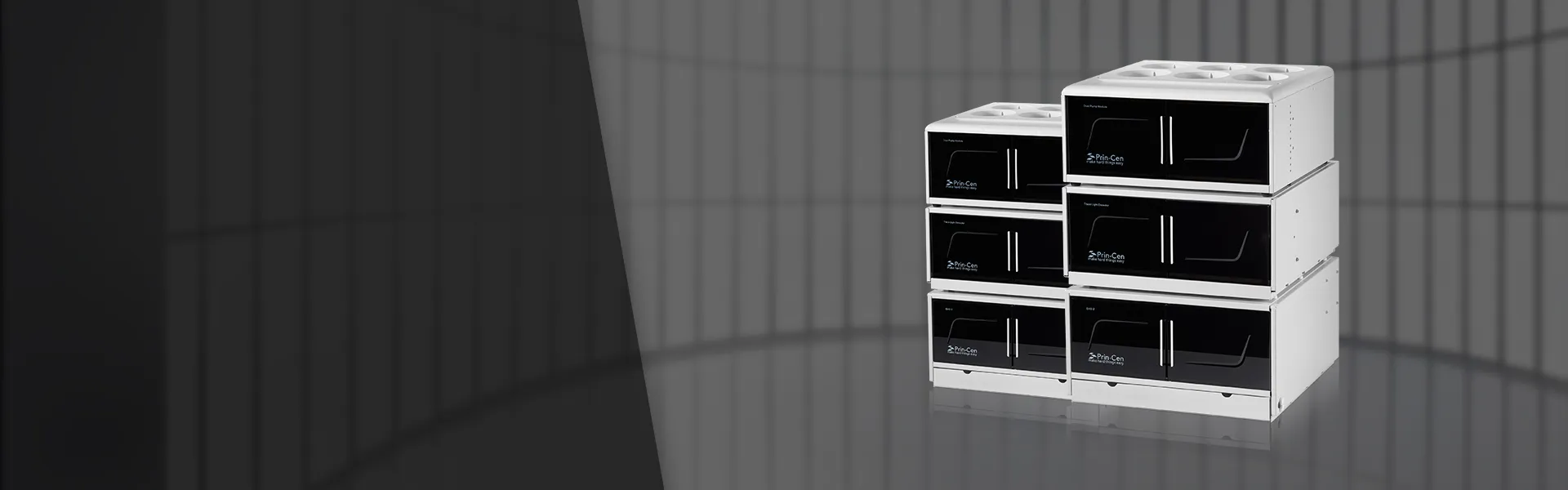
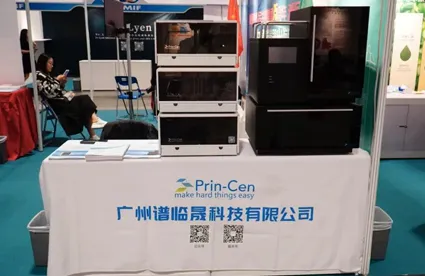
Prin-Cen’s LC ICPMS is a high-end hyphenated analytical platform that combines the separation capabilities of liquid chromatography with the high-sensitivity detection of ICPMS. Its metal-free separation system enables precise speciation analysis of As, Hg, Cr, Se, and other elements. With seamless coupling, low matrix interference, and rapid analysis, it supports ultra-trace elemental speciation testing in complex environmental, food, toy, and marine samples.
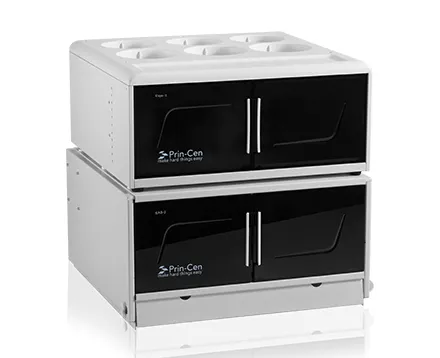
Prin-Cen’s LC-ICPMS features a fully inert PEEK flow path and flexible interface design, realizing seamless compatibility with the company’s IC-50/20/10 ion chromatography systems and mainstream chromatography systems of other brands. It supports direct coupling with sample pretreatment systems such as MSS-2, realizing automated analysis from sample pretreatment to separation and detection, with stable signal transmission and no cross-contamination.
| Method | Separation | Primary Purpose | Typical Applications |
| LC-ICPMS | Liquid chromatography | Separates and quantifies different elemental species | Arsenic, mercury, selenium and organometallic species |
| IC-ICPMS | Ion chromatography | Separates ionic elemental species before ICPMS detection | Cr(III)/Cr(VI), As(III)/As(V), bromate and ionic species |
| ICPMS | No chromatographic separation | Measures total elemental concentration | Routine trace and ultra-trace elemental analysis |
| Workflow | Separation Mode | Typical Use | Typical Examples |
| LC-ICP-MS | Liquid chromatography | Separation based on species chemistry | Selected arsenic, mercury, selenium, and organometallic species |
| IC-ICP-MS | Ion chromatography | Separation of ionic elemental species | Cr(III)/Cr(VI), As(III)/As(V), and bromate |
| ICP-MS | No chromatographic separation | Total elemental measurement | Routine trace and ultra-trace elemental analysis |
| Analytical Requirement | Recommended Configuration | Main Benefit |
| Routine elemental speciation | IC system + ICPMS interface | Stable routine separation and detection |
| Complex high-salt samples | ELSpe-2 PreCon + IC/LC + ICPMS | Matrix removal and trace enrichment |
| Automated batch analysis | EAS-2A + MSS-2 + LC-ICPMS | Reduced manual handling |
| Online digestion or derivatization | ELSpe-2 + post-column module + ICPMS | Integrated species conversion and detection |
| Customized research methods | Modular IC-50 platform + external ICPMS | Flexible method and detector integration |
| Analytical Requirement | Recommended Configuration | Main Benefit |
| Routine elemental speciation | ELSpe-2 + compatible ICP-MS interface | Routine separation and speciation analysis |
| Complex high-salt samples | ELSpe-2 PreCon + compatible ICP-MS interface | Matrix removal and trace enrichment |
| Automated batch analysis | EAS-2A + MSS-2 + compatible LC/IC-ICP-MS system | Reduced manual sample handling |
| Online digestion or derivatization | ELSpe-2 + online digestion or post-column module + ICP-MS | Integrated sample conversion and detection |
| Customized research methods | Modular IC-50 + compatible ICP-MS interface | Flexible method and detector integration |
Final configuration depends on the target species, sample matrix, analytical method, and ICP-MS interface.
LC-ICPMS (also written as LC-ICP-MS) combines chromatographic separation with element-specific detection by ICP-MS. Different chemical species of a target element are first separated and then transferred to the ICP-MS for detection and quantification. This enables laboratories to determine individual elemental species rather than only the total elemental content.
The sample may be extracted, diluted, filtered, or preconcentrated according to its matrix and target species. For complex or high-salt samples, Prin-Cen pretreatment modules help reduce matrix interference before separation.
The prepared sample enters a suitable chromatographic column, where different species are separated according to their charge, polarity, and other chemical properties. Prin-Cen’s inert PEEK flow path helps minimize metal contamination during separation.
As each species elutes from the column, the mobile phase carries it through a compatible interface into the ICP-MS. Online transfer reduces manual handling and helps preserve chromatographic resolution.
In the ICP-MS, the eluent is nebulized and introduced into the plasma, where the analytes are atomized and ionized. The ions are separated by mass-to-charge ratio and measured at selected isotopes, producing element-specific signals.
The software aligns ICP-MS signals with chromatographic retention times, integrates the peaks, and calculates the concentration of each species using the selected calibration method. Results can then be reviewed and reported.
 What is LC-ICP-MS and how does it work?
LC-ICP-MS combines chromatographic separation with element-specific detection by ICP-MS. It is used to separate and quantify different chemical species of selected elements.
Which Prin-Cen platforms support LC/IC-ICP-MS workflows?
Prin-Cen offers configurable platforms including the ELSpe-2 Elemental Speciation Analyzer, IC-50, and MSS-2 Sample Handling System. The final configuration depends on the target species, sample matrix, method, and ICP-MS interface.
What elements can be analyzed using LC-ICP-MS?
The platform supports validated methods for selected arsenic, mercury, selenium, and chromium species, depending on the column chemistry and ICP-MS configuration.
Why is LC-ICP-MS suitable for complex sample matrices?
A metal-free flow path, chromatographic separation, and appropriate sample preparation help reduce contamination and matrix interference before ICP-MS detection.
What are the main applications of LC-ICP-MS?
LC-ICP-MS is mainly used for elemental speciation analysis in food, environmental, marine, consumer product, and research samples.
Can Prin-Cen’s LC-ICP-MS platform perform automated analysis?
Yes. When configured with suitable sample handling modules and software, the workflow can automate sample preparation, separation, and data processing.
Can LC-ICP-MS analyze multiple elemental species?
Selected elemental species can be separated and quantified in one workflow when a validated multi-analyte method is available.
Is Prin-Cen’s LC-ICP-MS platform suitable for ultra-trace analysis?
Yes, under validated conditions. The achievable detection limit depends on the ICP-MS model, target species, sample matrix, sample preparation, and analytical method.