English
Modern analytical laboratories require more than simply measuring the total concentration of elements. In many applications, understanding the specific chemical forms of elements is essential for evaluating toxicity, environmental impact, material performance, and product safety.
LC-ICPMS combines the separation capability of liquid chromatography with the exceptional sensitivity of inductively coupled plasma mass spectrometry (ICP-MS), enabling accurate elemental speciation analysis at trace and ultra-trace levels. This technology helps laboratories identify different elemental compounds in complex samples where traditional analytical methods may not provide sufficient information.
Developed for advanced analytical challenges, Prin-Cen Scientific Limited provides innovative scientific instruments focused on trace and ultra-trace analysis (ng–pg level), elemental speciation, rare earth analysis, and complex matrix detection. With reliable performance and intelligent workflow solutions, Prin-Cen helps researchers and testing laboratories achieve more accurate and efficient analysis.
LC-ICPMS is a hyphenated analytical technique that integrates liquid chromatography (LC) separation with inductively coupled plasma mass spectrometry (ICP-MS) detection. It is primarily used for elemental speciation analysis, allowing scientists to determine not only how much of an element exists but also which chemical forms are present.
Traditional ICP-MS is highly effective for measuring total elemental concentrations, but it cannot always distinguish between different species of the same element. For example, arsenic, chromium, and mercury can exist in multiple chemical forms, and these forms may have significantly different chemical behaviors and biological effects.
The working principle of LC-ICPMS involves three main stages:
The sample is first introduced into a chromatographic separation system. Different compounds interact differently with the chromatographic column, allowing individual elemental species to be separated.
Advanced Liquid Chromatography Instruments provide precise separation performance, which is essential when analyzing complex samples containing multiple compounds.
After separation, the individual compounds enter the ICP-MS system through an optimized interface. The plasma source converts the compounds into ions for detection.
ICP-MS provides excellent sensitivity and selectivity, allowing laboratories to detect extremely low concentrations of elements and obtain accurate information about their chemical forms.
By combining separation and detection capabilities, LC-ICPMS provides a comprehensive analytical approach for challenging trace element applications.
Many modern industries require accurate detection of elements at extremely low concentrations. However, complex sample matrices can create significant analytical challenges, including interference, overlapping signals, and inaccurate quantification.
LC-ICPMS helps overcome these challenges through several key advantages.
In environmental, pharmaceutical, and advanced material analysis, target elements may exist at very low concentrations. Prin-Cen’s analytical solutions are designed to support trace and ultra-trace analysis at ng–pg levels, helping laboratories detect elements that may otherwise remain undetected.
The chemical form of an element often determines its properties and impact. Total concentration measurements alone may not provide sufficient information.
For example:
Different arsenic species have different toxicity levels.
Chromium species may have different environmental impacts.
Mercury compounds may behave differently in biological systems.
With chromatographic separation and ICP-MS detection, LC-ICPMS enables researchers to accurately identify and quantify individual elemental species.
Samples from environmental monitoring, food testing, and industrial production often contain high concentrations of salts, organic compounds, or other interfering substances.
Advanced analytical systems help improve accuracy when working with:
High-salt samples
Biological matrices
Environmental samples
High-purity industrial materials
The ability to perform elemental speciation makes LC-ICPMS valuable across a wide range of industries and research fields.
Environmental laboratories use elemental speciation technologies to analyze contaminants and evaluate environmental safety.
Typical applications include:
Arsenic species analysis in water samples
Chromium oxidation state determination
Mercury compound detection
Trace metal monitoring in soil and wastewater
Accurate species identification provides deeper insight into pollutant behavior and environmental risks.
Food products may contain trace elements from natural sources, processing conditions, or environmental contamination.
LC-ICPMS supports food safety laboratories by analyzing:
Toxic elemental species
Nutritional elements
Trace contaminants
This helps manufacturers and regulatory organizations improve quality control and compliance.
In pharmaceutical development, metal-related impurities and elemental compounds require accurate characterization.
Applications include:
Elemental impurity analysis
Metal-containing compound studies
Biological sample testing
The high sensitivity of LC-ICPMS allows researchers to obtain reliable analytical results from limited sample volumes.
Industries such as semiconductor manufacturing, energy storage, and specialty chemicals require precise elemental analysis.
By detecting trace impurities and identifying elemental forms, LC-ICPMS helps improve:
Material quality control
Process optimization
Product reliability
Selecting an appropriate analytical system requires careful consideration of application requirements, sample characteristics, and laboratory workflow.
For trace and ultra-trace applications, sensitivity is one of the most important factors. Laboratories should select systems capable of detecting low-level elemental species with high accuracy.
Complex matrices can influence analytical performance. A suitable system should provide reliable results when analyzing samples with challenging compositions, including high-salt and multi-component samples.
Modern laboratories need efficient workflows, reproducible results, and simplified operation.
Automation features such as:
Intelligent sample preparation
Integrated data processing
User-friendly software platforms
can significantly improve laboratory productivity.
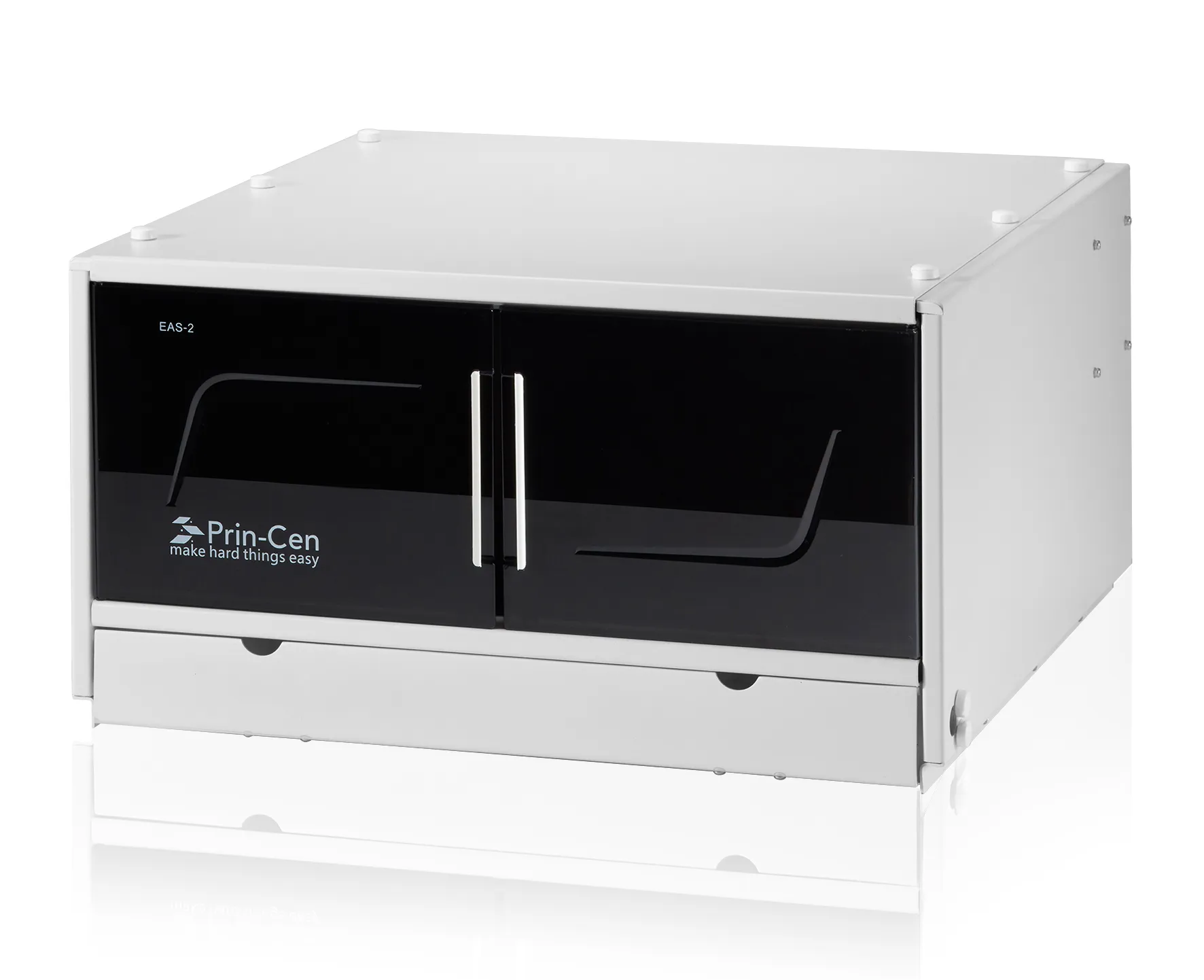
Prin-Cen Scientific develops advanced analytical instruments designed for demanding research and industrial environments. Its independently developed products include ion chromatographs, elemental form analyzers, hexavalent chromium analyzers, and automatic pretreatment systems.
The EasySpec series workstation provides powerful and user-friendly operation, supports multiple analytical systems, and complies with 21 CFR Part 11 requirements for regulated applications.
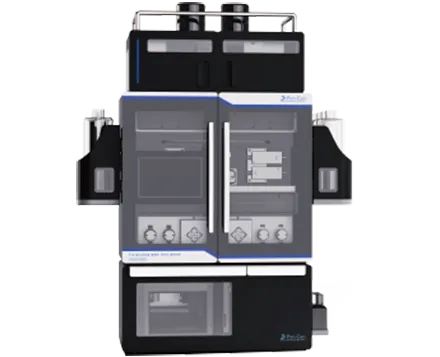
For laboratories requiring faster and more sensitive elemental speciation analysis, the ELSpe Series Elemental Speciation Analyzer provides a dedicated solution for arsenic, mercury, selenium, chromium, and other elements. It can be integrated with mainstream AFS and ICP-MS systems to support efficient analysis across environmental, food, pharmaceutical, and industrial applications.
The system is supplied with dedicated reagent kits that only require dilution with water before use. Detailed standard operating procedures and preset analytical methods help reduce method-development time and simplify routine laboratory operation.
The ELSpe Series can separate five arsenic species in approximately six minutes, three mercury species in seven minutes, and two chromium species in three minutes. This can increase sample throughput by two to three times compared with conventional analytical workflows.
The analyzer provides detection limits below 0.5 ppb for arsenic species and below 0.1 ppb for mercury species, supporting laboratories that require reliable trace and ultra-trace elemental speciation data.
Its post-column reaction design reduces the consumption of hydrochloric acid and potassium borohydride by more than 80%. This lowers operating costs, simplifies reagent handling, and reduces chemical waste.
The ELSpe Series is compatible with mainstream atomic fluorescence spectrometry and ICP-MS platforms. This flexibility allows laboratories to configure the system according to their sensitivity requirements, existing instruments, and target elemental species.
Prin-Cen Scientific Limited specializes in scientific instrument development and provides reliable solutions for laboratories requiring high-performance analytical technologies.
The company focuses on solving difficult analytical challenges through:
Trace and ultra-trace detection technologies
Elemental speciation solutions
Automated analytical workflows
Customized instrument development
Following the principle of “Make hard things easy,” Prin-Cen provides advanced analytical solutions that support cutting-edge research and industrial applications.
Whether for environmental analysis, food safety testing, pharmaceutical research, or advanced materials development, Prin-Cen helps laboratories achieve accurate and reliable elemental analysis.
As analytical requirements become increasingly complex, measuring total elemental concentration is often not enough. Laboratories need detailed information about elemental species, especially when working with trace-level targets and challenging sample matrices.
LC-ICPMS provides a powerful combination of chromatographic separation and ICP-MS detection, enabling accurate elemental speciation analysis across multiple industries.
With advanced instrument technology, automated workflows, and solutions designed for complex analytical challenges, Prin-Cen supports laboratories in improving accuracy, efficiency, and confidence in trace element analysis.
LC-ICPMS is used for separating, identifying, and quantifying different chemical forms of elements at trace and ultra-trace levels. It is widely applied in environmental monitoring, food safety, pharmaceutical research, and advanced material analysis.
ICP-MS measures the total concentration of elements in a sample, while LC-ICPMS combines liquid chromatography separation with ICP-MS detection to identify specific elemental species.
Liquid chromatography separates different compounds, while ICP-MS provides highly sensitive elemental detection. Combining both technologies allows laboratories to understand both elemental concentration and chemical form.
Yes. Properly configured LC-ICPMS systems can support analysis of complex matrices, including environmental samples, biological materials, and high-salt samples.
Industries using LC-ICPMS include environmental testing, food safety, pharmaceuticals, biotechnology, semiconductor manufacturing, and advanced materials research.
For professional consultation, customized analytical solutions, or product information, please visit Contact Us and connect with Prin-Cen’s technical team.