English
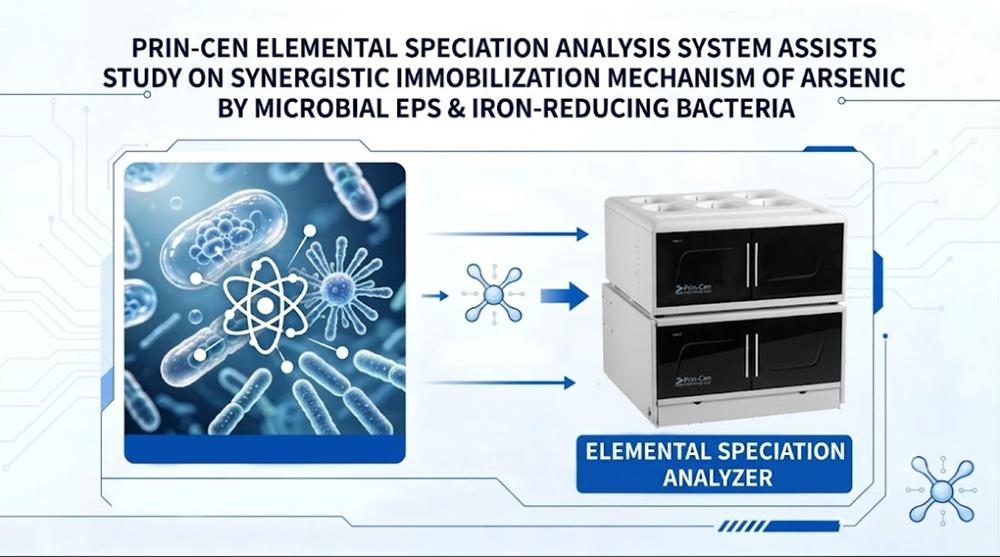
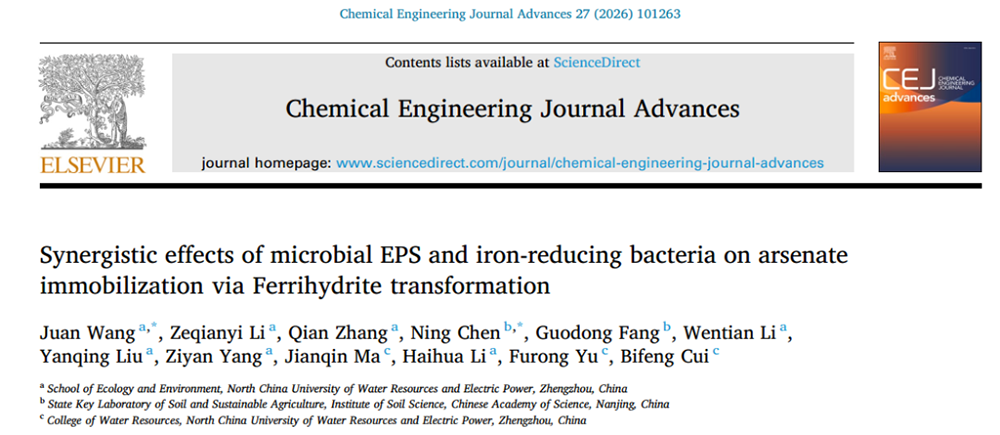
Recently, a user of Prin-Cen's elemental speciation analysis system published a research paper titled "Synergistic effects of microbial EPS and iron-reducing bacteria on arsenate immobilization via Ferrihydrite transformation" in the prestigious journal Chemical Engineering Journal Advances (IF=7.1). This study reveals, for the first time, the synergistic immobilization mechanism of arsenate [As(V)] by microbial extracellular polymeric substances (EPS) and iron-reducing bacteria (Shewanella oneidensis MR-1) within a ferrihydrite system, providing a vital theoretical foundation for the remediation of arsenic-contaminated groundwater and soil.
In this study, the precise determination of the speciation and concentration dynamics of As(III) and As(V) in the samples provided direct and reliable evidence verifying the microbial-mediated arsenic reduction process. However, the matrix of the soil/mineral samples is highly complex, and the concentration disparities between different arsenic species are immense. Featuring high sensitivity, strong anti-interference capabilities, and high throughput, Prin-Cen's elemental speciation analysis system perfectly adapted to the demanding requirements of these samples.
Arsenic (As) is a highly toxic metalloid element that is widely distributed in groundwater and soil environments, and long-term exposure can induce cardiovascular diseases as well as various types of cancer. In natural systems, the environmental behavior of arsenic is intricately coupled with the transformation of iron (oxyhydr)oxides and microbial activities. Ferrihydrite, as a poorly crystalline iron mineral with a high specific surface area, serves as a vital "sink" for arsenic; however, iron-reducing bacteria (such as MR-1) can reduce Fe(III) to Fe(II), leading to mineral dissolution and the subsequent release of arsenic. On the other hand, extracellular polymeric substances (EPS) secreted by microorganisms are rich in functional groups—such as carboxyl, hydroxyl, and amino groups—which can significantly alter the surface properties of minerals. Nevertheless, within a coexisting system of EPS, iron minerals, and iron-reducing bacteria, whether arsenic is ultimately immobilized or mobilized, and whether EPS plays a promoting or inhibiting role, has previously lacked systematic research.
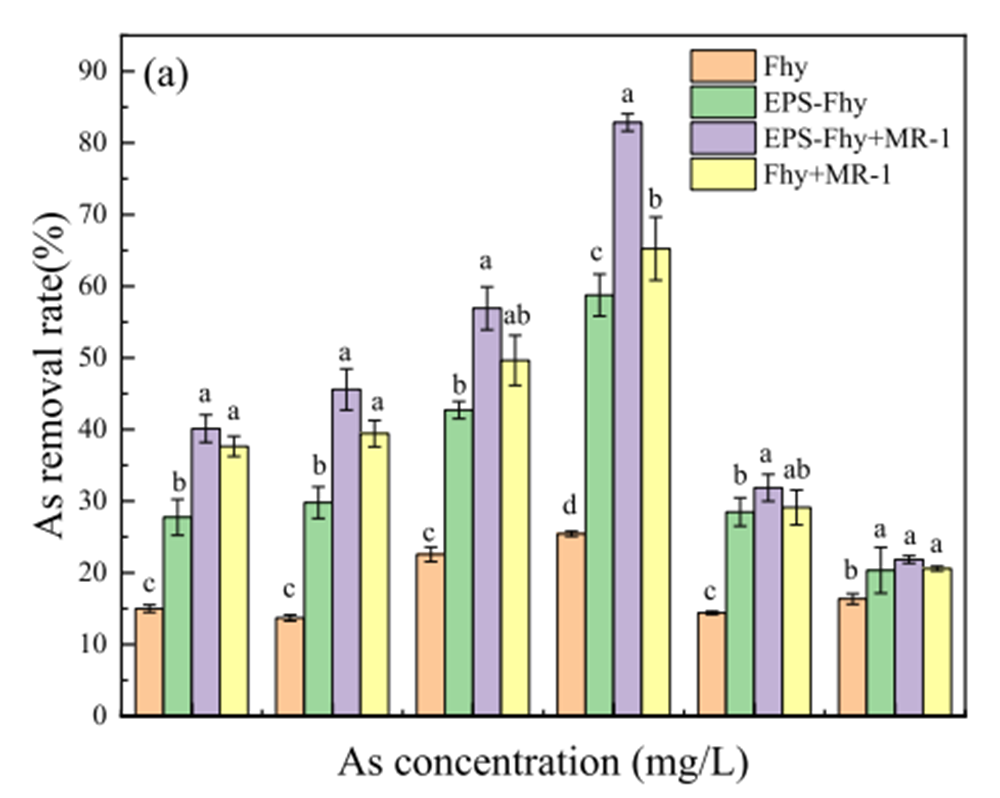
While pure ferrihydrite achieved an As(V) removal rate of only 15.00–25.44% , the EPS–ferrihydrite composite system dramatically increased this removal efficiency to 20.34–58.76%. FTIR and 3D excitation-emission matrix (EEM) fluorescence spectroscopy confirmed that the proteins, carboxyl groups, and phosphate groups within the EPS actively participated in the inner-sphere complexation of arsenic on the mineral surface.
Following the introduction of the iron-reducing bacterium MR-1 , the As(V) removal rate within the EPS–ferrihydrite system soared further to 21.85–82.86%. Notably, at an initial concentration of 50 mg/L, the removal efficiency peaked at 82.86%. Fe(II) concentration testing and speciation analysis demonstrated that microbial Fe(III) reduction worked in tandem with EPS surface complexation to jointly drive the stabilization of arsenic.
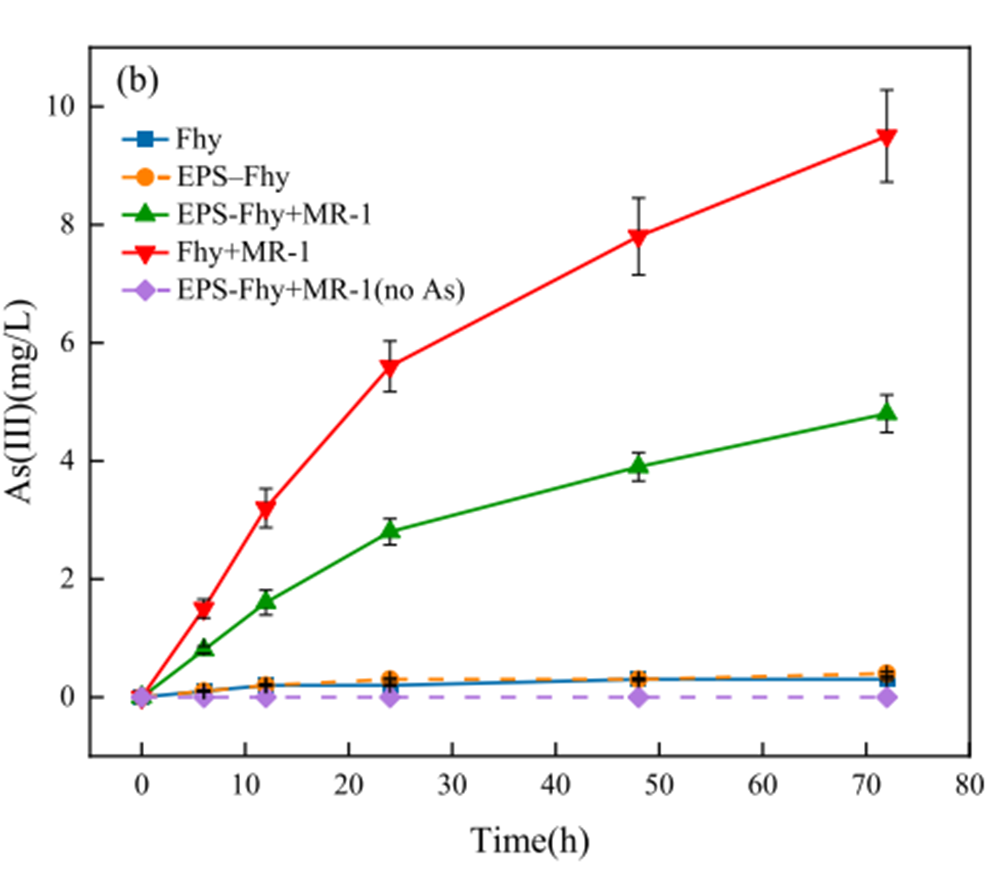
To cleanly differentiate biotic reduction from purely adsorptive removal, the study coupled an elemental speciation analysis system with an ICP-MS to precisely track the generation dynamics of As(III) within the system. The results revealed that As(III) concentrations steadily mounted after inoculation with MR-1, whereas virtually no As(III) was detected in the abiotic control groups, providing direct, indisputable proof of microbial As(V) reduction. Interestingly, the presence of EPS markedly lowered the accumulation of As(III), indicating that it may either suppress the reduction rate or accelerate re-immobilization. This successfully unveiled a multi-tiered regulatory mechanism characterized by "Surface Complexation + Microbial Reduction + Secondary Mineral Re-immobilization."
To elucidate how EPS, iron-reducing bacteria, and ferrihydrite synergistically regulate the environmental fate of arsenic, the absolute key lies in the simultaneous monitoring of As(V) removal and As(III) generation dynamics. However, the complex matrices of mineral suspensions, the massive concentration disparities between different arsenic species, and the heavy interference from microbial metabolites pose severe challenges to the sensitivity, anti-interference capability, and operational convenience of analytical instruments.
Leveraging the following core advantages, the Prin-Cen elemental speciation analysis system successfully overcame these technical bottlenecks, providing the research team with highly credible speciation data.
High Sensitivity, Making Trace Species "Visible": The analysis system delivers a detection limit of better than 0.5 ppb for arsenic species. Even within highly complex matrices such as microbial culture systems, it can precisely capture the minute variations of low-concentration As(III), providing irreplaceable, direct evidence to verify the microbial reduction process.
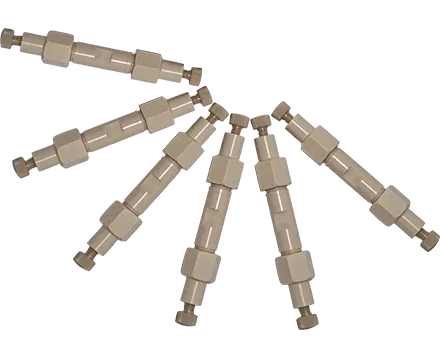
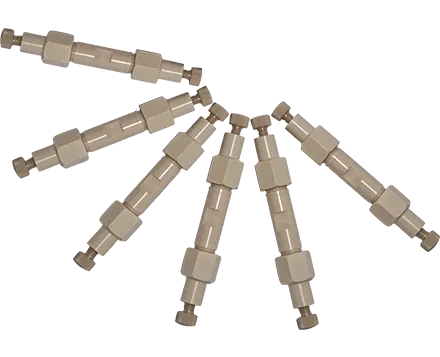
Rapid Analysis, Substantially Boosting Throughput: Utilizing a self-developed, specialized fast column for arsenic speciation, baseline separation of arsenic species is achieved in just 6 minutes. This significantly enhances experimental efficiency, enabling researchers to complete high-throughput speciation screening of large sample batches in a short timeframe.
Strong Anti-Interference Capability, Ensuring More Reliable Data: The specialized fast column for arsenic speciation possesses exceptional anti-interference capabilities. It eliminates the need for tedious sample pre-treatment while still yielding stable and accurate measurement results within complex matrices, providing solid data support for the research conclusions.
It is precisely thanks to the aforementioned advantages that the Prin-Cen elemental speciation analysis system operated stably within complex mineral suspension matrices. This allowed the research team to accurately monitor the dynamics of As(V) removal and As(III) generation, ultimately succeeding in revealing the coupled mechanism of the synergistic immobilization of arsenic by EPS and iron-reducing bacteria.
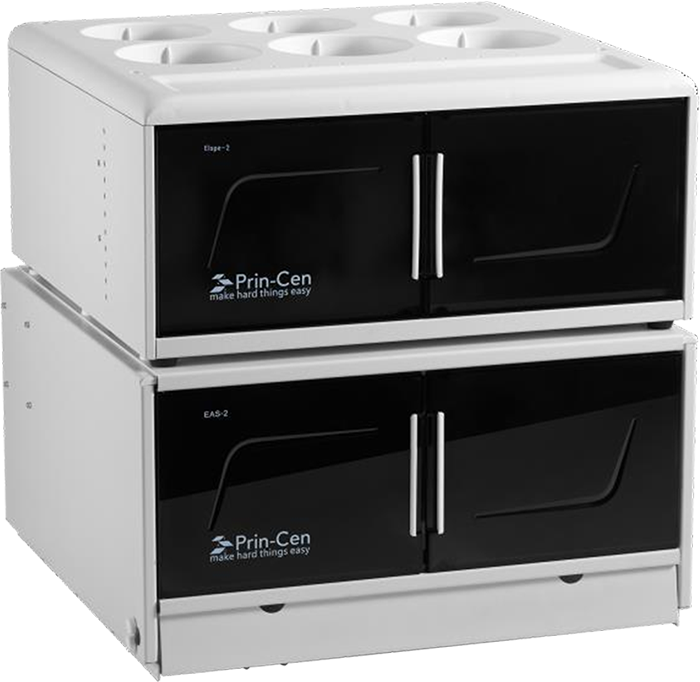
· User-Friendly Operation: Matched with the ONLY WATER KIT™ series of chromatography columns and reagent kits, it features out-of-the-box functionality that requires only simple water dilution before use, and comes equipped with standard operating procedures (SOPs) and pre-set methods.
· Fast and Efficient Analysis: It achieves the baseline separation of 5 arsenic species in just 6 minutes, boosting sample throughput by 2 to 3 times.
· High Sensitivity: It delivers an exceptional detection limit of less than 0.5 ppb for arsenic speciation.
· Reagent Economy & Eco-Design: Its unique post-column reaction architecture saves more than 80% of hydrochloric acid (HCl) and potassium borohydride (KBH4) consumption, making it both highly convenient and environmentally friendly.
· Excellent Compatibility: It seamlessly interfaces with mainstream brands of Atomic Fluorescence Spectrometers (AFS) and Inductively Coupled Plasma Mass Spectrometers (ICP-MS), covering a wide range of elemental speciation tasks.